
![App store [HOWTOPAY POS]](https://www.howtopay.com/images/app-store-icon-png-5.jpeg)
![Play Store [HOWTOPAY POS]](https://www.howtopay.com/images/app-store-icon-png-27.jpeg)
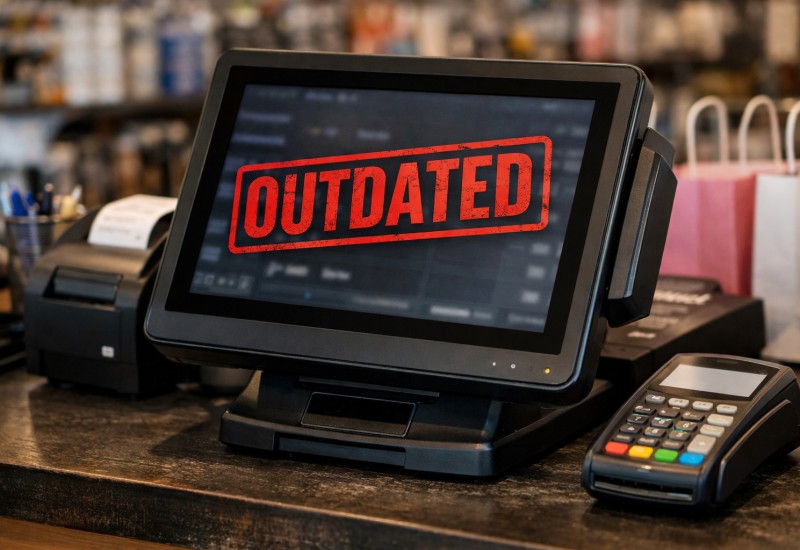
Hardware Manufacturers Are Not Software-First Businesses
 HowToPay
In many markets, point-of-sale (POS) systems are still purchased as hardware first, software second. The POS software supplied with terminals is frequently treated as a necessary accessory rather than a core business system. This approach is increasingly misaligned with how modern businesses operate—and with what regulators now expect.
The underlying issue is structural: hardware manufacturers build devices, not business software.
1. Hardware Manufacturers Are Not Software-First Businesses
POS hardware manufacturers excel at:
-
Designing terminals
-
Producing devices at scale
-
Managing supply chains and certifications
They are not typically specialists in:
-
Retail or hospitality operations
-
Financial workflows
-
Accounting and reporting logic
-
Regulatory compliance frameworks
-
Long-term software lifecycle management
As a result, the software layer is often:
-
Outsourced or minimally resourced
-
Designed only to make the device usable
-
Lacking strategic product vision
The software exists to support the hardware—not to support the business.
2. Limited Understanding of Real Business Operations
Modern businesses rely on POS systems to manage far more than sales. Yet bundled POS software frequently fails to reflect real-world operational needs, such as:
-
Multi-location management
-
Centralized pricing and menu control
-
Inventory across locations
-
Staff permissions and accountability
-
Cash handling and reconciliation
-
Management-level reporting
Because the software is designed without deep operational insight, it often forces businesses to adapt their processes to the system, rather than the system supporting the business.
3. Weak Understanding of Legal and Regulatory Requirements
POS software now sits at the intersection of:
-
Tax reporting
-
Audit trails
-
Transaction integrity
-
Data retention laws
-
Anti-tampering requirements
Hardware-led POS software often:
-
Lacks immutable transaction logs
-
Allows editing or deletion of historical transactions
-
Has no secure export format for auditors
-
Provides no clear compliance roadmap
As governments worldwide tighten fiscal and reporting regulations, these systems quickly become non-compliant, exposing merchants and payment partners to risk.
4. Software Architecture Is Often Outdated
Because software is not the core business of hardware manufacturers, many bundled POS systems:
-
Are built on legacy architectures
-
Depend on local storage only
-
Lack cloud-native design
-
Have limited or no API support
This prevents integration with:
-
Accounting platforms
-
Payroll systems
-
ERP and inventory software
-
Online ordering and delivery services
-
Modern payment and settlement platforms
The POS becomes an isolated system rather than a connected business platform.
5. Poor Update Cycles and Long-Term Maintenance
Hardware manufacturers prioritize:
-
New device releases
-
Cost reduction
-
Distribution volume
Software updates are often:
-
Infrequent
-
Reactive rather than proactive
-
Focused on bug fixes instead of feature development
-
Delayed when regulatory changes occur
This leaves merchants operating on outdated systems that do not evolve with the business or the law.
6. The Strategic Misalignment: POS Is Now Core Infrastructure
A POS system is no longer just a terminal interface. It is:
-
A financial record-keeping system
-
A compliance and audit platform
-
A business intelligence tool
-
A control layer for staff and operations
Treating POS software as a secondary component fundamentally misunderstands its role in modern commerce.
Conclusion
POS software bundled with hardware is often an afterthought, not because of neglect, but because hardware manufacturers are not structured to design, maintain, and evolve complex business software.
As regulatory requirements increase and businesses demand deeper operational insight, this model becomes increasingly fragile.
Merchants, banks, and payment providers must recognize that software—not hardware—is now the critical layer of POS infrastructure. Selecting POS software should be a strategic decision based on compliance, scalability, and business fit—not simply what happens to come packaged with a terminal.
RELATED NEWS
POS

POS
-
 12/22/2025 42
 -
 12/21/2025 11
 -
 12/21/2025 12
 -
 12/21/2025 9
 -
 12/21/2025 9
-
 09/20/2023 4871
 -
 11/15/2023 4248
 -
 07/23/2022 4155
 -
 09/30/2023 4139
 -
 11/14/2023 3887
FEATURED NEWS
NEWS

NEWS
PAYMENTS
POS

LEAVE A COMMENT